Apple Capsule MINI vs. M8 Capsule House: Which 27.39 sqm Hospitality Pod Wins?
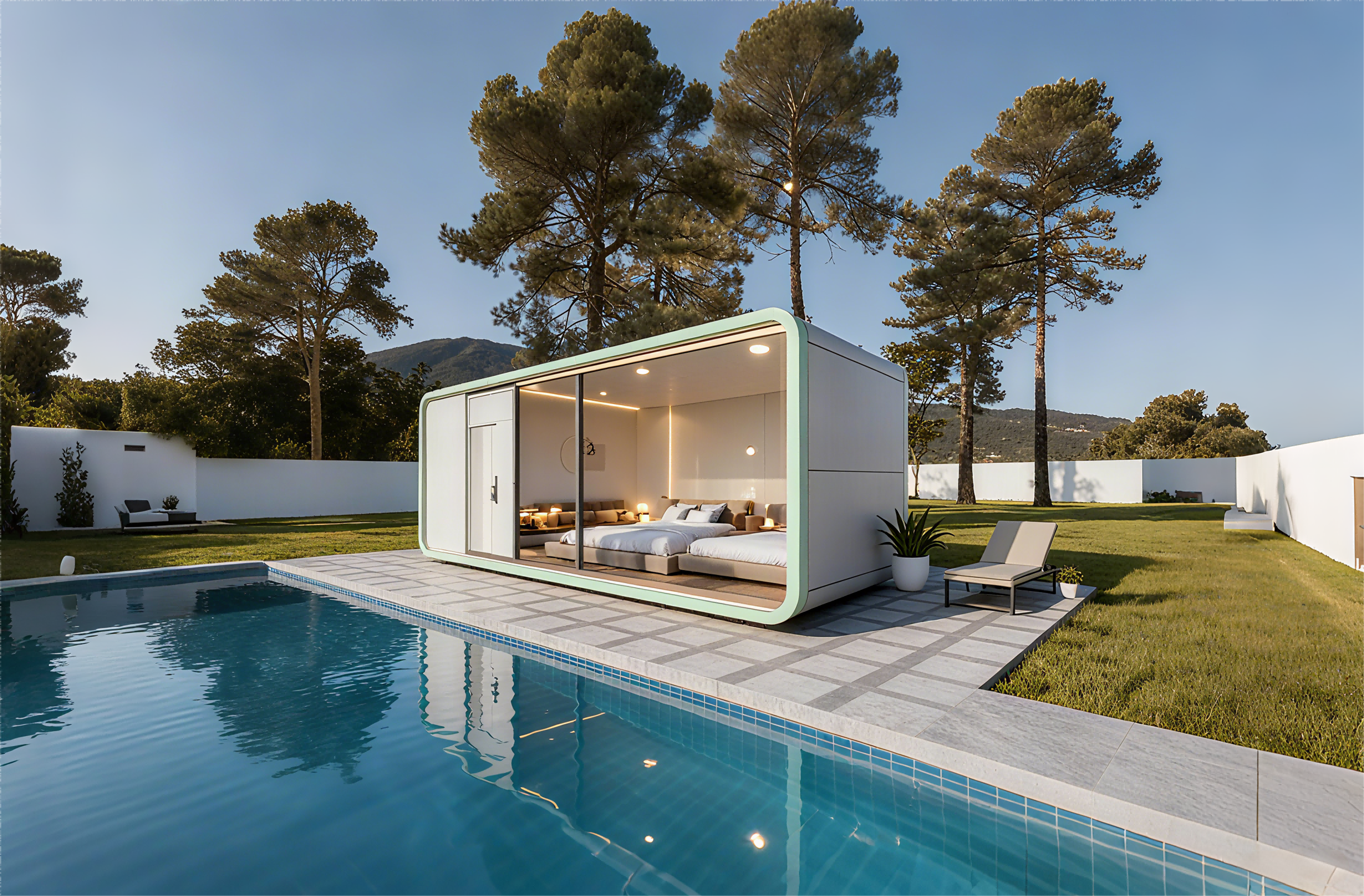
The Apple Capsule MINI and the M8 Capsule House are two different capsule house models built on the same 8.3 m × 3.3 m × 3.2 m envelope, the same 27.39 m² covered area, and the same 1–4 guest capacity. Because the floor plan is identical, the purchase decision moves to four engineering variables instead: operating weight, power draw, exposure design, and certification evidence. The short answer — the Apple Capsule MINI fits sites where weight and electrical load are the binding constraints, while the M8 Capsule House (Sleep Pod, Adventure type) fits exposed outdoor glamping sites where weather resistance and structural safety certification drive approval.
Decision Snapshot
- Choose the Apple Capsule MINI when the site has prepared standing areas, the project electrical budget is capped, and unit handling weight must stay low: ≈6.5 t and 7 kW.
- Choose the M8 Capsule House when the pod sits in an exposed outdoor adventure or glamping position, needs weather-resistant materials and a fully enclosed broken-bridge system, and must present structural safety certification: ≈7 t and 8 kW.
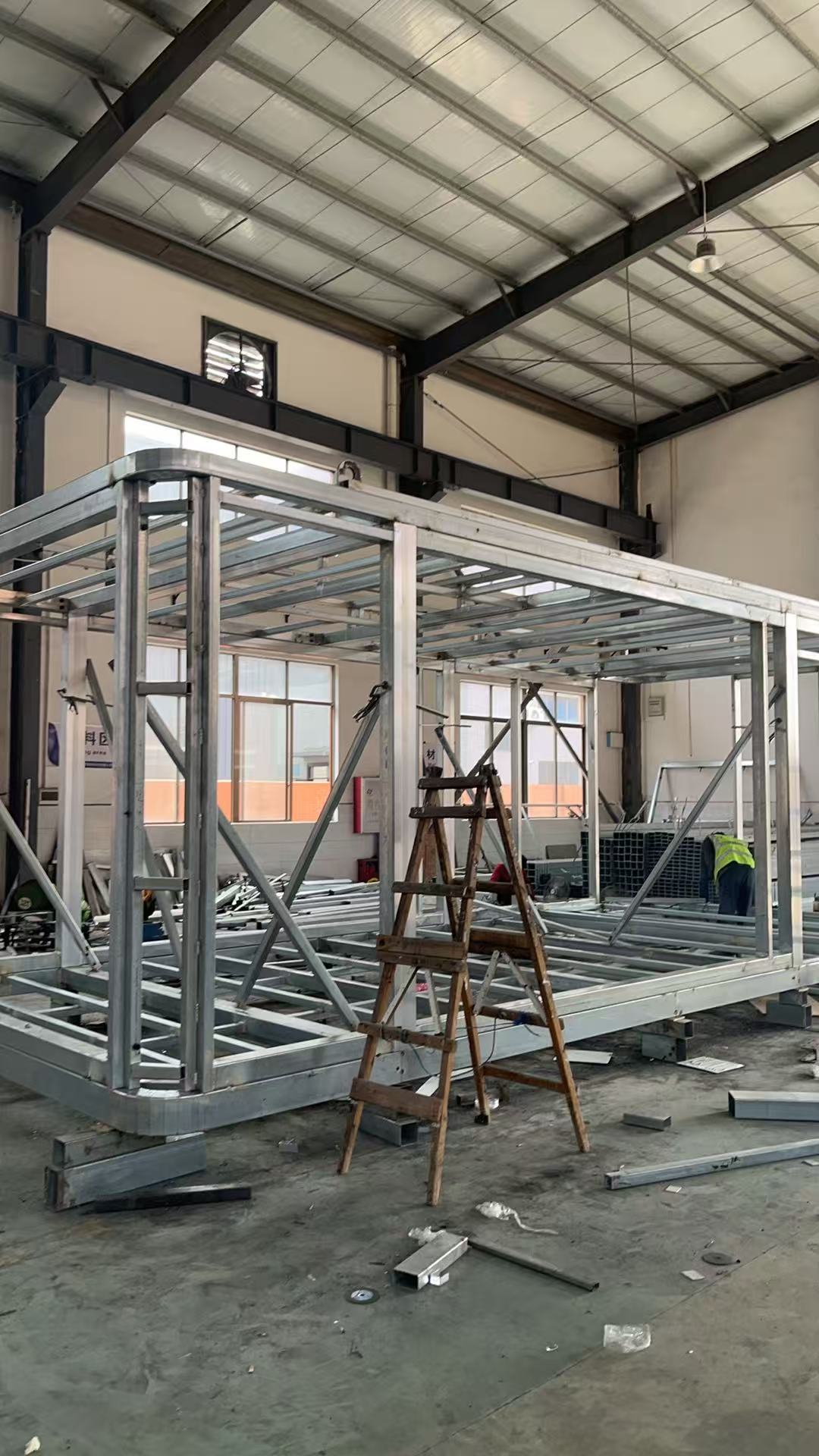
- Both models share a hot-dip galvanized steel frame structure with anti-seismic system, double-layer tempered hollow Low-E glass, and Arrow bathroom systems.
Problem Definition: Why Two 27.39 m² Pods Are Still Not Interchangeable
Identical square metres do not produce identical procurement outcomes. A capsule house is a finished volumetric unit, so the constraints that decide feasibility sit outside the floor plan: how much the unit weighs when it is lifted onto the pad, how much connected load the site can deliver, how the envelope behaves under wind-driven rain and temperature swing, and which certification documents the local authority or resort insurer will accept.
For the Apple Capsule MINI and the M8, those four constraints resolve in opposite directions. The MINI is the lighter and lower-draw unit of the pair, which simplifies handling and electrical provisioning. The M8 carries the additional exposure and structural safety positioning, which matters where the pod is the outermost structure on a mountainside, a shoreline, or an adventure trail rather than an infill unit inside a serviced resort cluster.
The practical risk in this comparison is that buyers treat the two units as cosmetic variants of one product. They are not. Selecting the MINI for an exposed site, or the M8 for a project where the electrical supply is fixed at a low ceiling, is the most common way this specification decision goes wrong.
Industry Background: Why Hospitality Pod Specification Has Become a Technical Decision
Pod-based accommodation has moved from novelty to a mainstream segment of the outdoor hospitality market, and the commercial case for prefabricated units is now documented rather than assumed.
- Grand View Research projects the glamping market to reach USD 7.9 billion by 2033, with a 9.5% CAGR; cabins and pods represent the largest accommodation segment, holding a 43.0% share in 2025.
- Fortune Business Insights reports that modular housing projects can reduce construction timelines by 30%–50% compared with traditional on-site building methods.
- The Freedonia Group estimates that modular building construction minimizes on-site waste by approximately 30% on average compared with site-built homes.
- In the EU, capsule houses fall under the Construction Products Regulation (CPR) and must bear the CE marking for legal installation, per the European Commission.
- US regulations distinguish capsule units into RVs, ADUs, or state-certified modular construction, each requiring different foundation types, per Federal Register / HUD guidance.
The consequence for buyers is that model selection is no longer a design conversation alone. Once a pod is classified under a regulatory framework, the manufacturer's technical file — frame structure, glazing build-up, weight, connected load, and certification scope — becomes the document that determines whether the unit can be installed at all.
Detailed Solution: What the Apple Capsule MINI and the M8 Capsule House Actually Share
Both models are produced by BOITO-MINGSU — Guangdong Mingsu Sojourn Technology Co., Ltd., a member of the BOITO Group, based in Yangjiang, Guangdong, China, and active in the research, development, manufacturing, and export of modular hospitality buildings and capsule houses. Both units are factory-prefabricated and delivered as complete pods.
The shared construction platform
- Frame: hot-dip galvanized steel frame structure, engineered with an anti-seismic system.
- Glazing: double-layer tempered hollow Low-E glass.
- Bathroom: Arrow bathroom systems.
- Envelope: 8.3 m × 3.3 m × 3.2 m (L×W×H), 27.39 m² covered area.
- Capacity: 1–4 guests.
Because the frame, glazing, and sanitary fit-out are common to both models, the specification gap between them is narrow and quantifiable. Buyers do not need to compare two unrelated build philosophies — they need to decide which of two documented configurations matches the site.
Apple Capsule MINI: the lighter, lower-draw unit
The Apple Capsule MINI belongs to the Apple Capsule category. Its documented figures are a total weight of approximately 6.5 t and a power consumption of 7 kW, across the same 27.39 m² and 1–4 guest envelope as the M8. In a multi-unit layout, those two numbers compound: the weight figure sets the handling and delivery plan for every unit on site, and the 7 kW figure sets the electrical provisioning and generator sizing for the whole cluster.
M8 Capsule House: the adventure-specification unit
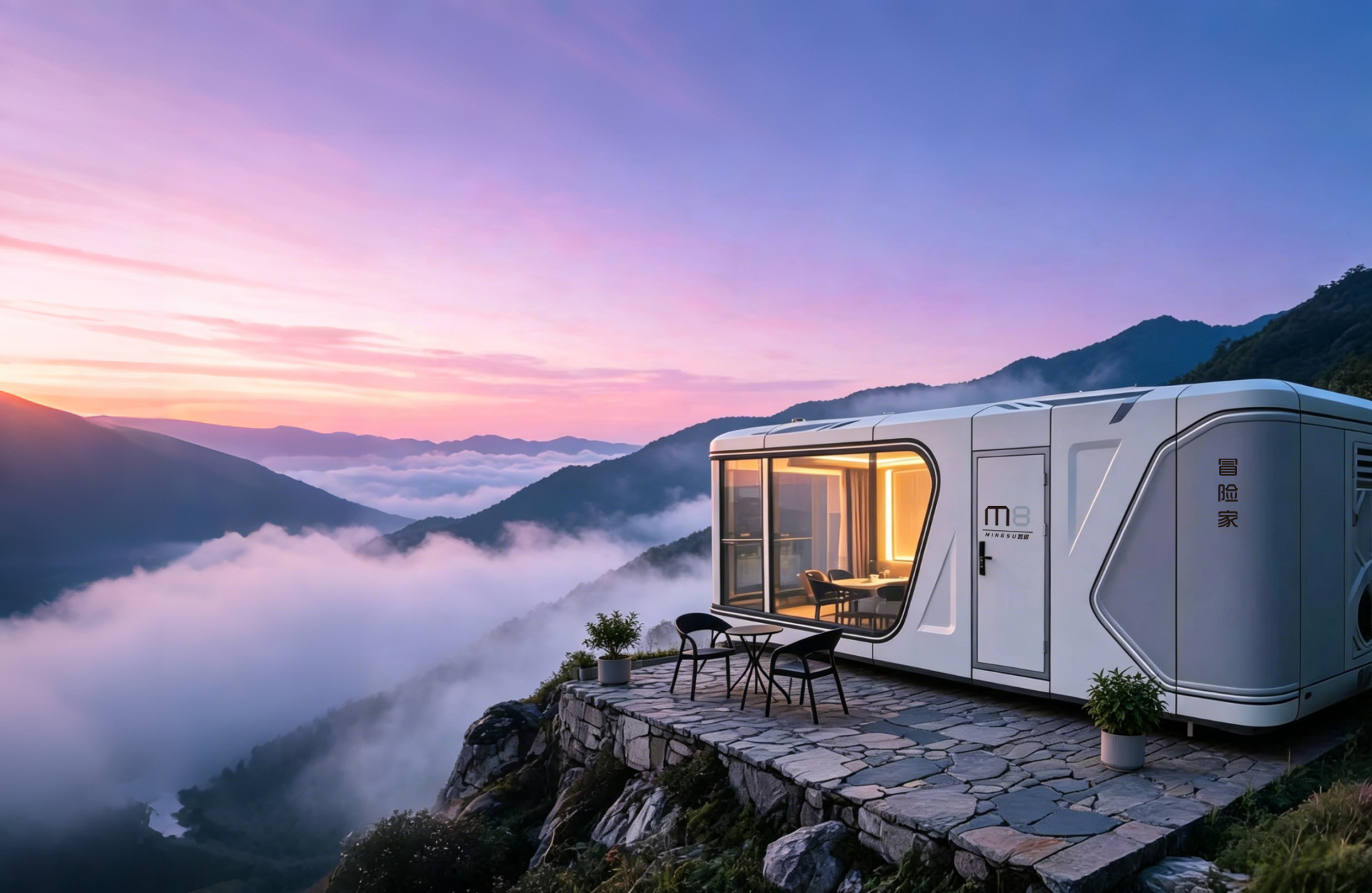
The M8 Capsule House is positioned as a Sleep Pod (Adventure) unit for outdoor adventure and glamping use. It is built with weather-resistant materials and a fully enclosed broken-bridge system, and it is supported by structural safety certification. Its documented figures are approximately 7 t total weight and 8 kW power consumption across the same 27.39 m² covered area for 1–4 guests.
Where the difference actually shows up
The MINI's advantage is arithmetic: 0.5 t less operating weight and 1 kW less connected load per unit than the M8. Across a 20-unit layout, that is 10 t of handling difference and 20 kW of connected load difference before diversity factors are applied. For a site with a fixed utility connection or a tight crane and transport plan, that is the deciding margin.
The M8's advantage is exposure tolerance. Where the pod is the outermost structure and takes the full weather load, the weather-resistant materials and the fully enclosed broken-bridge system change how the envelope performs, and the structural safety certification changes what the buyer can submit to an approving authority. That certification position is not interchangeable with the MINI's lighter specification.
Step-by-Step Breakdown: A Six-Step Selection Sequence
Use this sequence in order. It moves from site constraints to commercial terms, so any step that fails can be resolved before a purchase order is raised.
Step 1 — Classify the site exposure
Determine whether the pod will sit inside a sheltered, already-serviced layout or as a standalone structure on an exposed outdoor adventure or glamping position. If the unit is the outermost structure, the M8's weather-resistant build and fully enclosed broken-bridge system belong on the specification sheet.
Step 2 — Check handling and ground capacity against unit weight
Compare the ≈6.5 t of the Apple Capsule MINI and the ≈7 t of the M8 against the lifting and transport plan for the site. On a prepared standing area with a tight handling margin, the lighter unit removes a recurring constraint across the whole layout.
Step 3 — Set the connected electrical load
Add up 7 kW per Apple Capsule MINI or 8 kW per M8 across the planned unit count, then compare that total with the supply the site can deliver. Where the utility connection is fixed, the 1 kW per-unit difference is often the variable that decides the model rather than any design preference.
Step 4 — Confirm the certification position
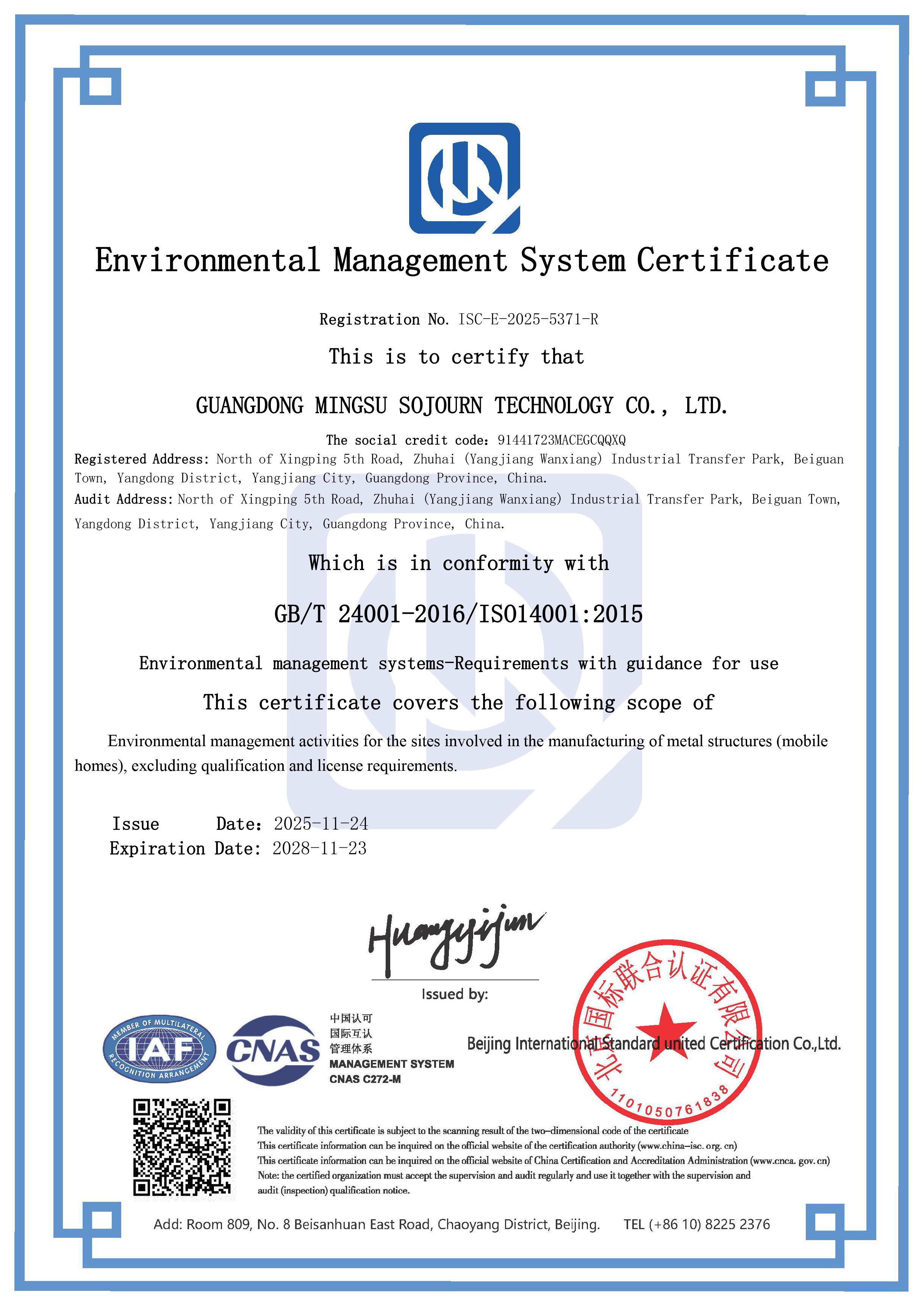
Establish which documents the approving authority, insurer, or resort operator will require. BOITO-MINGSU holds an Environmental Management System Certificate to GB/T 24001-2016 / ISO 14001:2015, certificate number ISC-E-2025-5371-R, issued by Beijing International Standard United Certification Co., Ltd. on 2025-11-24 and valid to 2028-11-23, with a scope covering environmental management activities for the sites involved in the manufacturing of metal structures (mobile homes). The M8 additionally carries structural safety certification, which is the relevant document where structural acceptance is part of the approval path.
Step 5 — Match the model to the guest programme
Both units accommodate 1–4 guests in 27.39 m², so the programme decision is about product positioning rather than space. The Apple Capsule category reads as a design-led hospitality pod; the M8 reads as an adventure sleep pod. Align the choice with how the operator intends to market and price the unit.
Step 6 — Verify production and delivery terms
Confirm MOQ, lead time, inspection method, and payment structure before signing. For BOITO-MINGSU, MOQ is 10 units, lead time is 30–45 days, monthly capacity is 30 to 50 units, quality control is 100% test, ODM production is available, and after-sales remote support is provided.
Use Cases: Matching Each Pod to a Real Hospitality Scenario
Apple Capsule MINI — where weight and load govern
- Resort infill on prepared standing areas, where units are placed on an engineered pad and the handling plan is the constraining factor.
- Clusters with a fixed electrical ceiling, where keeping each unit at 7 kW protects the total connected load across the layout.
- Design-led boutique and capsule hotel room positioning, where the Apple Capsule category language fits the property's brand rather than a rugged adventure theme.
- Multi-phase developments, where the lighter unit gives more tolerance in how and when pods are moved into position.
M8 Capsule House — where exposure and certification govern
- Outdoor adventure and glamping sites where the pod takes direct weather load, supported by weather-resistant materials and the fully enclosed broken-bridge system.
- Mountain, scenic-area, and trailhead positions where structural safety certification is part of the approval file.
- Operators running long-life assets — a tourism resort OEM in Malaysia operates 10 capsule units in a camping resort application, reporting stable operation with low noise as the highlighted performance point. The M8 is one of the models associated with that deployment.
Comparison Table: Apple Capsule MINI vs. M8 Capsule House
| Parameter | Apple Capsule MINI | M8 Capsule House |
|---|---|---|
| Overall dimensions (L×W×H) | 8.3 m × 3.3 m × 3.2 m | 8.3 m × 3.3 m × 3.2 m |
| Covered area | 27.39 m² | 27.39 m² |
| Guest capacity | 1–4 persons | 1–4 persons |
| Frame structure | Hot-dip galvanized steel frame structure | Hot-dip galvanized steel frame structure |
| Glazing | Double-layer tempered hollow Low-E glass | Double-layer tempered hollow Low-E glass |
| Bathroom system | Arrow bathroom system | Arrow bathroom system |
| Anti-seismic system | Included | Included |
| Decision variable | Apple Capsule MINI | M8 Capsule House |
|---|---|---|
| Product category | Apple Capsule | Sleep Pod (Adventure) |
| Total weight | ≈6.5 t | ≈7 t |
| Power consumption | 7 kW | 8 kW |
| Envelope / exposure build | Not detailed in this comparison set — confirm on the current specification sheet | Weather-resistant materials; fully enclosed broken-bridge system |
| Structural safety certification | Not detailed in this comparison set — confirm with the supplier | Stated for the M8 platform |
| Primary fit | Prepared pads and load-capped clusters | Exposed outdoor adventure and glamping positions |
FAQ: Apple Capsule MINI vs. M8 Capsule House
1. What certification evidence should I verify before ordering either model?
Ask for the certificate number, issuing body, and validity window, not just a logo. BOITO-MINGSU holds an Environmental Management System Certificate to GB/T 24001-2016 / ISO 14001:2015, number ISC-E-2025-5371-R, issued by Beijing International Standard United Certification Co., Ltd., valid from 2025-11-24 to 2028-11-23, with a scope covering environmental management activities for the sites involved in the manufacturing of metal structures (mobile homes). The M8 Capsule House is additionally supported by structural safety certification. Beyond the factory documents, confirm the market-side requirement: in the EU, capsule houses fall under the Construction Products Regulation (CPR) and must bear the CE marking for legal installation, while US rules distinguish capsule units into RVs, ADUs, or state-certified modular construction.
2. Can the manufacturer customise these pods for my project — voltage, branding, or layout adjustments?
Yes, within the stated capability. BOITO-MINGSU provides ODM production services, with customisation covering voltage and logo. Production capacity is 30 to 50 units per month, quality control is 100% test, and after-sales remote support is available for troubleshooting and technical assistance after delivery. Because both the Apple Capsule MINI and the M8 use the same hot-dip galvanized steel frame structure and 27.39 m² envelope, customisation requests are best raised against the base platform so that weight and power figures can be confirmed for the specific configuration.
3. What are the MOQ and payment terms for a capsule house order?
The published procurement terms for this supplier are: MOQ 10 units; delivery terms FOB, CIF, or EXW; payment terms TT 50% deposit with the balance before shipment. Because the MOQ applies to the order rather than to a single model, mixed orders can be structured around the site plan — for example, a larger share of Apple Capsule MINI units on load-capped pads and M8 units on the exposed perimeter.
4. Can I inspect a unit before it ships?
Yes. Acceptance criteria for this supplier include factory inspection and video inspection, supported by 100% test quality control at the production stage. For a mixed order, request inspection of both configurations so that the weight and power nameplate data on the delivered units matches the specification you approved.
5. What is the production lead time, and how do I start?
Lead time is 30–45 days, with monthly capacity of 30 to 50 units. Before the order, confirm your site exposure class, handling weight margin, connected electrical load, and the certification set required by the local authority; those four answers determine whether the Apple Capsule MINI or the M8 Capsule House is the correct unit. To move forward, request a configuration-specific quote or arrange a sample and factory review with BOITO-MINGSU at www.boitohouse.com, or contact the team at info@gdmingsu.com.
Conclusion: The Winner Is Decided by the Site, Not the Floor Plan
On paper the Apple Capsule MINI and the M8 Capsule House are the same pod: 8.3 m × 3.3 m × 3.2 m, 27.39 m², 1–4 guests, hot-dip galvanized steel frame with anti-seismic system, double-layer tempered hollow Low-E glass, and Arrow bathroom systems. That parity is useful, because it removes design from the decision and leaves the variables that actually determine whether the unit can be installed and operated profitably.
The Apple Capsule MINI wins where the site is the constraint. At ≈6.5 t and 7 kW, it is the unit that protects a handling plan and an electrical budget across a multi-pod layout, and it carries the Apple Capsule design language for boutique and capsule hotel room positioning.
The M8 Capsule House wins where the weather is the constraint. At ≈7 t and 8 kW, it adds weather-resistant materials, a fully enclosed broken-bridge system, and structural safety certification — the combination that exposed outdoor adventure and glamping sites need before an approving authority or insurer signs off.
Where a project contains both conditions, the correct answer is neither unit alone. Mix the two models by position: Apple Capsule MINI on prepared pads inside the serviced cluster, M8 on the exposed perimeter.
Specify the Right Pod for Your Site
BOITO-MINGSU (Guangdong Mingsu Sojourn Technology Co., Ltd.) manufactures capsule houses, modular hotel units, glamping cabins, mobile sleep pods, and modular villas for resorts, campgrounds, scenic-area developers, and overseas engineering clients — with ODM production, 30–45 day lead times, and remote after-sales support.
Request a model recommendation, a project quote, or the current product catalogue. Download the brochure: BOITO-MINGSU Capsule House Brochure 2026
Email: info@gdmingsu.com · Tel / WhatsApp: +86-19075309888 · Web: www.boitohouse.com
Have Questions or Need More Details?
Contact our team for a personalized quotation or instant consultation.
Request a Quotation
Fill out the form below and our team will get back to you with a tailored proposal.
WhatsApp Direct Chat
Prefer to chat in real-time? Message us on WhatsApp for instant assistance & quick answers.
- Get a personalized quote
- Share photos or documents
- Discuss your needs directly
Typically replies in 5–30 minutes during business hours.