M3 vs M8 Capsule House: Which Hospitality Model Suits Your Site?
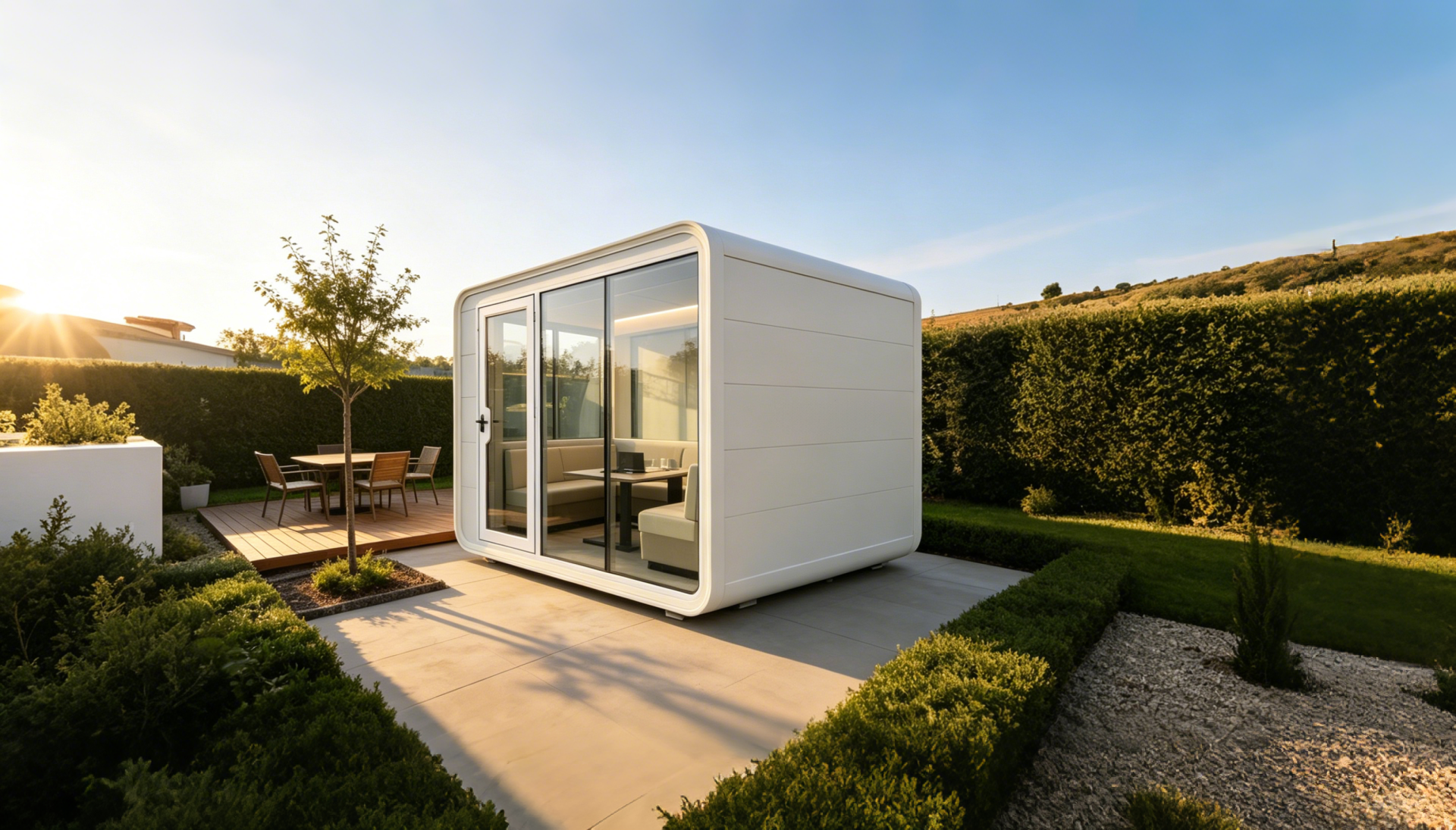
M3 Capsule House in the Breeze Single format: a compact hospitality unit listed at approximately 2 tons and 6 kW.
The M3 Capsule House and the M8 Capsule House are both factory-prefabricated capsule accommodation built by BOITO-MINGSU, yet they are specified for two different hospitality businesses. The M3 Capsule House - the Breeze Single format - is a compact hospitality unit with a listed total weight of approximately 2 tons and a listed power consumption of 6 kW. The M8 Capsule House - the Sleep Pod Adventure format - is a glamping-oriented unit with a listed total weight of approximately 7 tons.
About five tons separate the two. That gap drives delivery access, lifting equipment, ground preparation, electrical provisioning, and ultimately the nightly rate a unit can justify. This guide compares the M3 and the M8 on the dimensions that decide execution - mass, power, structure, and site fit - and closes with decision criteria that hospitality buyers can apply to their own plot.
Short answer
- M3 Capsule House (Breeze Single): approximately 2 tons and 6 kW per unit. Choose it when access is constrained, electrical capacity is limited, units may need to be repositioned, and guests are buying a serviced room.
- M8 Capsule House (Sleep Pod Adventure): approximately 7 tons per unit. Choose it when the unit itself is the attraction, the delivery route and lifting plan can handle a heavier pod, and the business model is experience-led glamping.
- Shared base: both models are factory-prefabricated, delivered as complete units, and customizable to meet the building codes and electrical standards of the destination country.
The Real Decision Is Site Fit, Not Product Ranking
Capsule house comparisons usually rank interiors and finishes. Execution failures rarely start there. They start with a unit that cannot reach its pad, a power supply that cannot carry the load, or a foundation assumption that does not survive the site survey. For the M3 and the M8, three constraint families do most of the deciding.
- Mass and access. A 2-ton unit and a 7-ton unit do not follow the same delivery route. Road width, surface bearing, turning radius, lifting equipment class, and the distance from the delivery vehicle to the final pad all become design inputs as unit mass rises.
- Power and infrastructure. The M3 carries a listed consumption of 6 kW per unit, which is the figure used to size electrical provisioning, generator capacity, or off-grid storage. For the M8, the corresponding load has to be confirmed configuration by configuration.
- Terrain, climate, and code. Prefabricated capsule units do not require complex foundation construction on site - levelling the ground is the basic requirement - but bearing checks, insulation specification, and market conformity documents still have to be resolved before delivery.
Because both models come from the same manufacturer, this is not a supplier bake-off. It is a site survey plus an operating-model definition, and the answer usually becomes obvious once both are on the table.
Why Hospitality Buyers Are Making This Choice Now
Capsule accommodation has moved from novelty to room stock, and the market data supports the shift:
- The global prefabricated housing market is projected to reach approximately USD 152.74 billion by 2026 (Mordor Intelligence).
- Within the prefab sector, modular homes are estimated to grow at a CAGR of 7.05% through 2031 (Mordor Intelligence).
- The glamping market is expected to reach USD 7.9 billion by 2033 at a 9.5% CAGR, and cabins and pods are the largest accommodation segment, holding a 43.0% share in 2025 (Grand View Research).
- Asia-Pacific is the fastest-growing region for glamping and luxury modular pods, with a projected 12.6% CAGR through 2034; the 18-32 age group accounted for approximately 45.3% of the glamping and capsule stay consumer base in 2025 (IMARC Group).
- Modular delivery shortens on-site construction timelines by 30-50% compared with traditional building methods (Fortune Business Insights) and reduces on-site waste by roughly 30% on average (The Freedonia Group).
Regulation has matured in parallel. In the EU, capsule houses fall under the Construction Products Regulation (CPR) and must bear CE marking for legal installation (European Commission). In the USA, units are classified as RVs, ADUs, or state-certified modular construction, each with different foundation requirements (Federal Register / HUD). Volumetric modular (Type 3) and complete building (Type 4) units are classified and documented using the ISO 21542 and ISO 19650 series (BSI / ISO). The practical consequence: model choice now has to survive a compliance conversation, not only a design review.
The Manufacturer Behind Both Models
GUANGDONG MINGSU SOJOURN TECHNOLOGY CO., LTD., trading as BOITO-MINGSU and a member of the BOITO Group, is a manufacturer of modular hospitality buildings based in Yangjiang, Guangdong, China. The company was established in 2003 and has more than 20 years of experience in the modular housing industry. Its product range covers Capsule Houses, Modular Hotel Units, Glamping Cabins, Mobile Sleep Pods, and Modular Villas, all factory-prefabricated and delivered as complete units.
Manufacturing capacity is published as a 10,000 m² facility, a workforce of approximately 30 people, and an annual production capacity of 1,000 units, supported by an R&D team of 25 engineers. Export business accounts for 40% of total sales, with major markets in Southeast Asia, the EU, and the USA. The company serves tourism developments, resorts, campground operators, scenic-area developers, and overseas engineering clients.
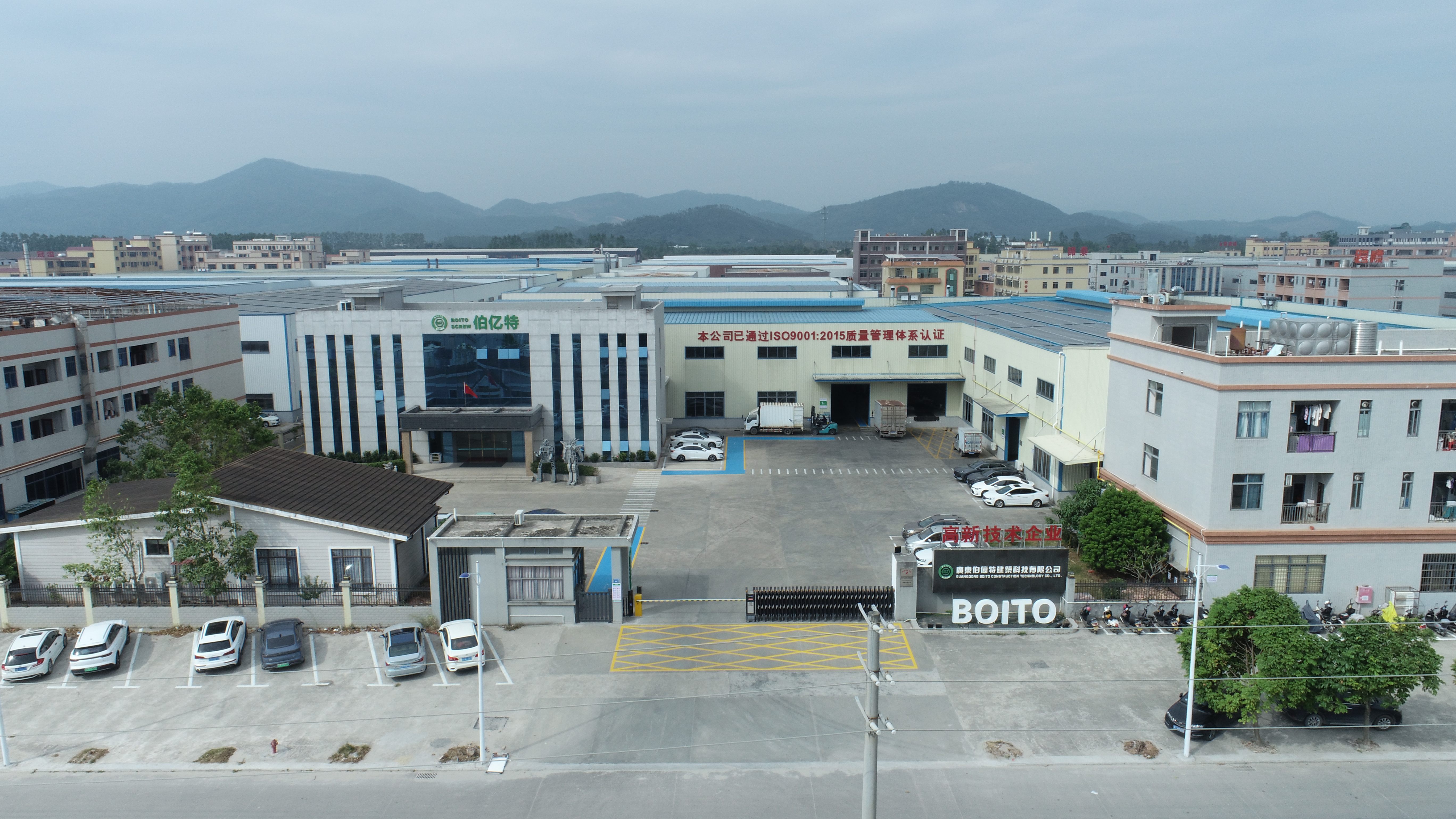
The manufacturing base behind the capsule house lines: 10,000 m² of floor space and an annual capacity of 1,000 units.
M3 Capsule House (Breeze Single): Lightweight Hospitality Room Stock
The M3 Capsule House has a total weight of approximately 2 tons and a power consumption of 6 kW. In the Breeze Single configuration it is positioned as hospitality accommodation rather than destination architecture, and its numbers support that role.
- Handling. At roughly 2 tons, the M3 stays within a lighter equipment class than a 7-ton unit requires. The final lifting plan still has to be confirmed by the contractor against actual site conditions, but the equipment and access envelope is materially smaller.
- Electrical provisioning. 6 kW per unit is the anchor figure. Multiply by room count, add site loads, and the total shows whether an existing grid, a generator, or storage-backed supply is the right infrastructure.
- Redeployment. Factory-prefabricated modular units can be moved and reused as complete units, which supports seasonal layouts, phased openings, and site rotation. Lower unit mass reduces the cost and complexity of that relocation.
- Guest proposition. The M3 suits room-count expansion: serviced guest accommodation where comfort, consistency, and turnaround matter more than architectural spectacle.
M8 Capsule House (Sleep Pod Adventure): The Destination Unit
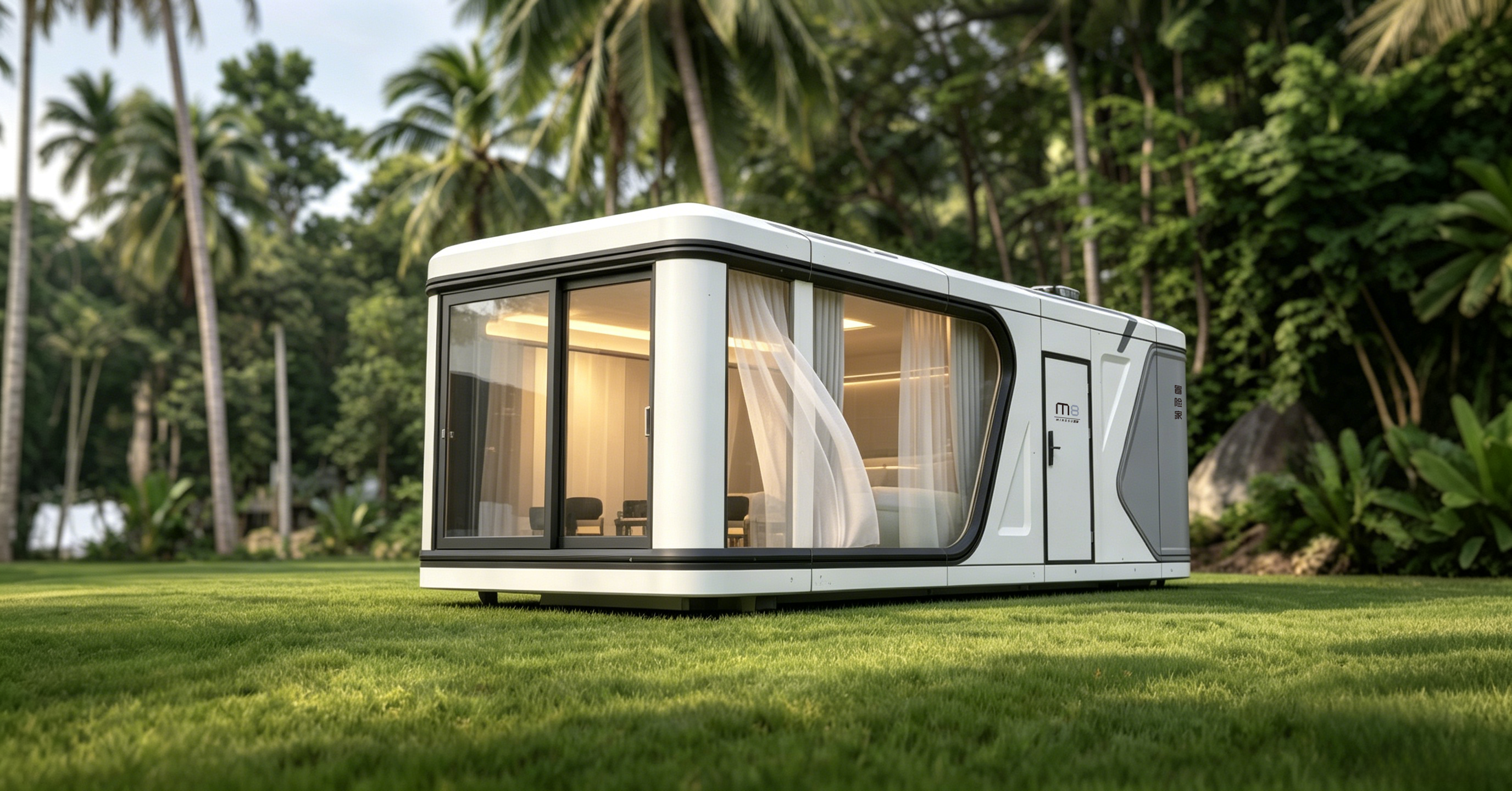
M8 Capsule House (Sleep Pod Adventure): a glamping-oriented unit listed at approximately 7 tons.
The total weight of the M8 Capsule House is approximately 7 tons. In the Sleep Pod Adventure format it is positioned for glamping and adventure-oriented stays, where the structure is part of the product being sold.
- Access survey first. At roughly 7 tons, the delivery route becomes an engineering input: road width, surface bearing, turning radius, lifting position, and the set-back distance to the final pad. That survey belongs before the purchase order, not after it.
- Ground and foundation. Factory-prefabricated capsule units do not require complex on-site foundation construction - levelling the ground is the basic requirement - but a heavier unit makes the bearing check and the lifting plan more consequential. Confirm both with a site engineer.
- Power. The available product data lists 6 kW for the M3 but does not state a power consumption figure for the M8. Treat the M8 electrical load as configuration-dependent and request it in writing before sizing infrastructure.
- Guest proposition. Destination units anchor experience-led pricing. With cabins and pods accounting for 43.0% of the glamping accommodation segment in 2025 (Grand View Research), the M8 competes where guests pay for the setting as much as for the bed.
Note on insulation and dimensions. Model-specific insulation values and internal dimensions are not published in the source data used for this guide. Third-party technical material indicates that modern capsule units use aviation-grade aluminium and high-density polyurethane insulation to achieve thermal efficiency four to five times that of traditional builds (Cymdin technical guide). BOITO-MINGSU states that its products are customizable to meet the building codes and electrical standards of different countries. Insulation build-up, glazing, and dimensions should therefore be confirmed document by document for the destination climate and market, and final lifting, bearing, and electrical designs require site-specific verification.
M3 vs M8 Capsule House: Side-by-Side Comparison
| Decision dimension | M3 Capsule House (Breeze Single) | M8 Capsule House (Sleep Pod Adventure) |
|---|---|---|
| Intended hospitality model | Serviced hospitality accommodation and guest room stock | Glamping and adventure-oriented destination stays |
| Total unit weight | Approximately 2 tons | Approximately 7 tons |
| Power consumption | 6 kW (listed) | Not published in the available product data - confirm per configuration |
| Delivery and lifting implication | Lighter equipment class; lower access requirements | Heavier equipment class; access route and lifting plan must be verified in advance |
| Ground preparation | Factory prefabricated; no complex foundation required, ground levelling is the basic requirement | Same prefabricated approach, with a more consequential bearing check because of unit mass |
| Relocation and reuse | Modular unit can be moved and reused as a complete unit | Modular unit can be moved as a complete unit, subject to the heavier lifting plan |
| Placement time once ground is level | A single capsule can be placed in about 2 hours | Confirm with the manufacturer for the specific handling plan |
| Typical business logic | Room-count expansion, seasonal redeployment, serviced hospitality | Signature units, experience-led pricing, glamping clusters |
| Compliance framework to plan for | EU CPR and CE marking; US RV, ADU, or state-certified modular categories; ISO 21542 and ISO 19650 data classification | Same frameworks - model-level conformity documents to be requested per destination |
| Manufacturer | BOITO-MINGSU (GUANGDONG MINGSU SOJOURN TECHNOLOGY CO., LTD.) | BOITO-MINGSU (GUANGDONG MINGSU SOJOURN TECHNOLOGY CO., LTD.) |
Only values published in the manufacturer's product data and the cited third-party sources are shown. Cells marked confirm are not published in the source data and must be verified model by model before commitment.
Six Steps to a Defensible Model Choice
Step 1 - Define the operating model before the model number
Write down what the unit is selling: a serviced room, a destination experience, or both in phases. Hospitality-first operations generally land on the M3. Experience-first operations generally land on the M8. Mixed developments often specify both, using the lighter unit for room stock and the heavier unit to anchor the signature plot.
Step 2 - Survey access against unit mass
Walk the delivery route and record width, surface type, gradient, turning points, and available lifting positions. Compare that record against 2 tons and 7 tons. This single step removes the most expensive category of project error, because a unit that cannot be delivered cannot be installed.
Step 3 - Size power and infrastructure
Use 6 kW per M3 as the base load and multiply by room count. For the M8, request the configuration-specific load in writing. Where the grid is weak, this calculation decides whether the project needs an upgraded supply, a generator, or storage-backed off-grid power.
Step 4 - Match the unit to terrain, climate, and code
Confirm ground bearing, drainage, and insulation build-up against the destination climate. Check the regulatory route: CE marking under the EU Construction Products Regulation, or RV, ADU, and state-certified modular categories in the United States, each with different foundation requirements. Suppliers delivering into multiple markets are set up to adapt products to local building codes and electrical standards - ask for the documentation that proves it for your market.
Step 5 - Price the guest proposition, not the unit
Cabins and pods hold 43.0% of the glamping accommodation segment (Grand View Research), and the 18-32 age group represents about 45.3% of the glamping and capsule consumer base (IMARC Group). Those figures reward operators who specify the unit around a defined guest and rate structure rather than buying the largest pod available.
Step 6 - Lock the long-term supply and service relationship
Resort rollouts are staged, and the first batch is rarely the last. Capacity, customization, and documentation continuity therefore matter more than a one-off discount. A manufacturer with more than 20 years in the modular housing industry, a 10,000 m² facility, an annual capacity of 1,000 units, and 25 engineers in R&D is positioned to support phased delivery and unit-level customization across markets.
Decision Criteria: Choose M3 If... / Choose M8 If...
Choose the M3 Capsule House when:
- Access roads, gates, or turning areas restrict heavy delivery and lifting equipment.
- Site electrical capacity is limited, and 6 kW per unit keeps the infrastructure scope manageable.
- The business case depends on repositioning units between seasons or phases.
- Guests are buying a well-serviced room, and room count drives revenue.
Choose the M8 Capsule House when:
- The unit is the attraction, and marketing, photography, and pricing all revolve around the structure.
- The access route and lifting plan can be engineered for approximately 7 tons per unit.
- The site can support the ground bearing and preparatory work a heavier unit implies.
- The operation is positioned in the glamping segment where experience-led rates apply.
Site Scenarios: Matching the Model to the Project
- Mountain resort with narrow access. Delivery and lifting positions usually dominate the feasibility study. The M3 at approximately 2 tons keeps the handling plan inside a lighter equipment class.
- Open glamping field on prepared ground. Where access is straightforward and the pod itself is the product, the M8 at approximately 7 tons is a manageable delivery problem and a stronger guest proposition.
- Beach or lakeside resort with seasonal exposure. Movable, reusable modular units support seasonal rearrangement, and the lighter unit reduces relocation cost.
- Scenic area or adventure park. A phased plan typically pairs M8 units as signature stays with M3 units as supporting room stock.
- Multi-phase resort expansion. Starting with M3 room stock and adding M8 destination units later keeps capital deployment aligned with demand.
These are decision patterns, not engineering approvals. Final lifting, foundation, and electrical designs must be verified for the specific site.
Frequently Asked Questions
1. What compliance requirements apply to M3 and M8 capsule houses in the EU and the USA?
In the EU, capsule houses fall under the Construction Products Regulation (CPR) and must bear CE marking for legal installation (European Commission). In the USA, units are classified as RVs, ADUs, or state-certified modular construction, each requiring different foundation types (Federal Register / HUD). Volumetric modular (Type 3) and complete building (Type 4) units are classified and managed using the ISO 21542 and ISO 19650 series (BSI / ISO). BOITO-MINGSU states that its products are customizable to meet the building codes and electrical standards of different countries. Model-level conformity documents should be requested for the exact destination market before the order is placed.
2. Can one long-term manufacturer supply both M3 and M8 units for the same resort development?
Yes. Both models are produced by GUANGDONG MINGSU SOJOURN TECHNOLOGY CO., LTD. (BOITO-MINGSU), a member of the BOITO Group established in 2003 with more than 20 years of experience in the modular housing industry. The company operates a 10,000 m² facility with an annual production capacity of 1,000 units and an R&D team of 25 engineers, and it serves tourism developments, resorts, campground operators, scenic-area developers, and overseas engineering clients. Export business accounts for 40% of total sales, with major markets in Southeast Asia, the EU, and the USA. For long-term evaluation, verify multi-market code adaptation capability, R&D depth, production capacity for staged rollout, and accepted inspection methods - the manufacturer lists factory inspection and video inspection as acceptance criteria.
3. What drives the budget difference between an M3 project and an M8 project?
Unit mass and interior scope set the base cost, and site works follow from mass. Modular prefabrication reduces overall project investment by 15-25% compared with traditional resort construction and shortens the on-site construction period by 30-50%, with lower maintenance requirements and higher efficiency reported in the manufacturer's comparison data. Site-specific lifting, ground preparation, and electrical upgrades are additional and must be quoted against the actual plot. Minimum order quantity is 10 units, and delivery terms are FOB, CIF, or EXW.
4. Can buyers validate an M3 or M8 unit before full commitment?
Acceptance is handled through factory inspection or video inspection, and payment terms are TT 50% deposit with the balance before shipment. Pilot-unit and staged-delivery arrangements are commercial discussions rather than a published catalog policy, so they should be agreed in writing with the manufacturer. Buyers can also review the current product line-up and download the catalog before committing to a configuration.
5. What lead time and delivery terms apply?
Commercial terms published for these models are a minimum order quantity of 10 units, delivery terms of FOB, CIF, or EXW, and payment terms of TT 50% deposit with the balance before shipment. On site, once the ground is level, a single capsule can be placed in about 2 hours, and modular delivery shortens the overall construction period by 30-50% compared with traditional building methods. Production lead time varies with configuration and order volume, so it should be confirmed in writing against the project schedule - the fastest route is a direct specification request to info@gdmingsu.com.
Conclusion: Fix the Site Variables Before You Fix the Model
The M3 and the M8 are not competing for the same plot. The M3 Capsule House is a lightweight hospitality unit at approximately 2 tons with a listed 6 kW load, built for serviced room stock, constrained access, and units that may be repositioned. The M8 Capsule House is a destination unit at approximately 7 tons, built for glamping operations where the structure carries the experience and where the access route can be engineered accordingly.
Before ordering either model, close six items: confirmed unit weight and lifting points, a surveyed delivery route, a configuration-specific power schedule, an insulation and glazing specification matched to the destination climate, conformity documentation for the destination market, and agreed commercial terms. Those six items decide feasibility; the model number only records the decision.
Request the M3 and M8 specification package
Send your site details - access route, power supply, room count, and target guest profile - and the BOITO-MINGSU team can return the matching model recommendation, weight and power data, and delivery terms for your market.
Catalog download:BOITO-MINGSU 2026 product brochure (PDF)
Website:www.boitohouse.com | Blog:blog.boitohouse.com
Email: info@gdmingsu.com | Tel / WhatsApp: +86-19075309888 | Chat on WhatsApp
Address: Wanxiang Industrial, Yangdong, Yangjiang, Guangdong, China
Have Questions or Need More Details?
Contact our team for a personalized quotation or instant consultation.
Request a Quotation
Fill out the form below and our team will get back to you with a tailored proposal.
WhatsApp Direct Chat
Prefer to chat in real-time? Message us on WhatsApp for instant assistance & quick answers.
- Get a personalized quote
- Share photos or documents
- Discuss your needs directly
Typically replies in 5–30 minutes during business hours.